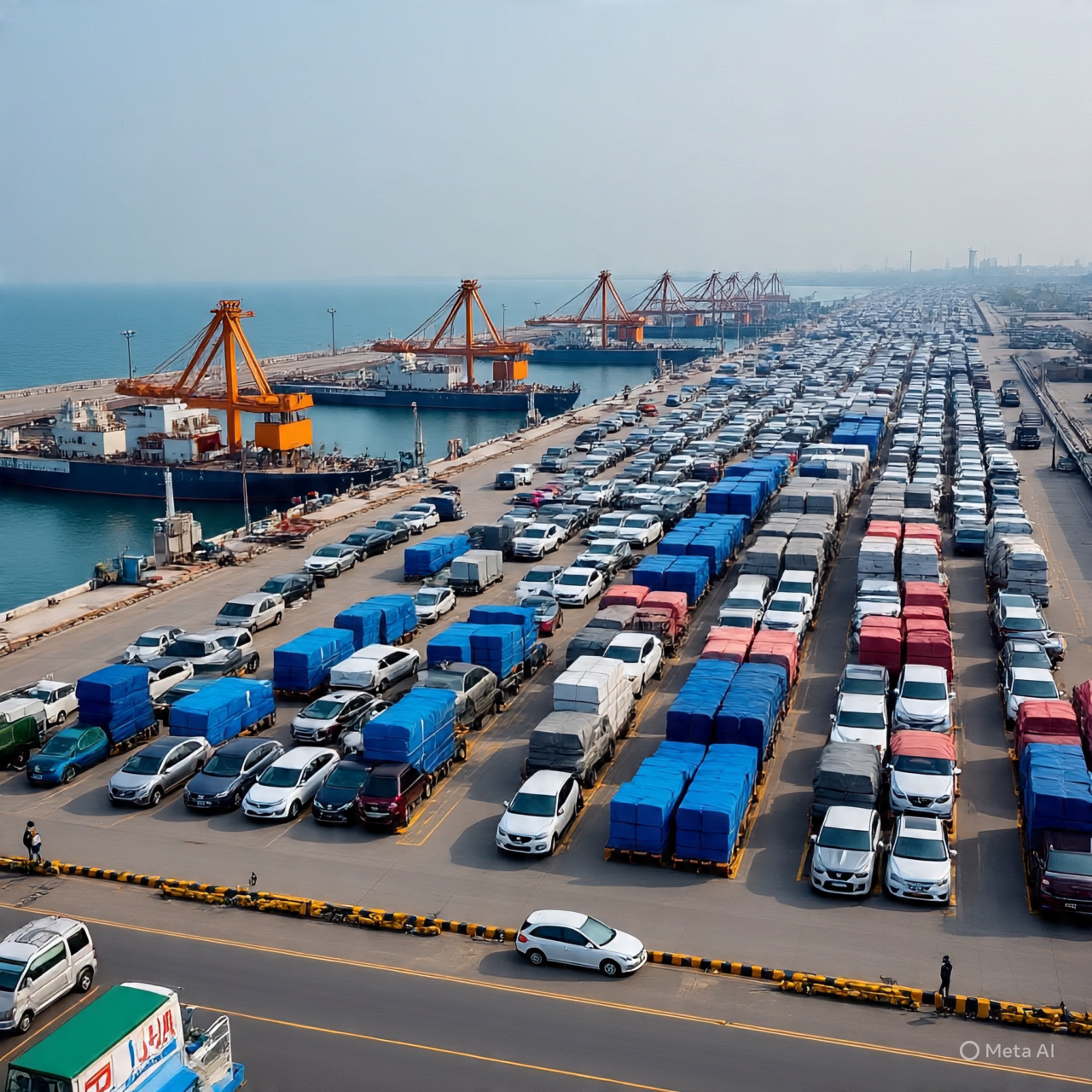
In a major policy shift, Pakistan’s Tariff Policy Board (TPB), chaired by Commerce Minister Jam Kamal Khan, has approved the commercial import of used cars up to five years old. This decision comes with a hefty 40% Additional Regulatory Duty (ARD) and will soon be presented to the Economic Coordination Committee (ECC) for final approval.
Key Features of the New Policy
Used vehicles under PCT code 8703, up to five years old, can now be imported.
A 40% ARD will be charged on these imports.
This age limit of five years will remain in effect until June 30, 2026, after which the restriction will be removed entirely.
All imported cars must meet environmental and safety standards as determined by the Ministry of Industries and Production and other relevant authorities.
The decision was reached after two rounds of meetings involving representatives from the Commerce Ministry, Industries and Production, Finance Division, and Federal Board of Revenue (FBR). Despite concerns raised by the local auto sector, the board moved ahead, citing the need to meet IMF benchmarks and expand consumer choice in Pakistan’s car market.
Industry Concerns
Local manufacturers have strongly opposed the move, warning that unrestricted import of used cars could harm domestic production. They argue that Pakistan’s auto industry—already facing rising costs and low sales—may struggle to survive against cheaper, better-equipped Japanese imports.
Moreover, stakeholders have highlighted that the used-car trade has previously drawn attention from international watchdogs like the Financial Action Task Force (FATF) due to risks of money laundering and terror financing. They claim that their policy recommendations, based on international best practices, were largely ignored.
Benefits for Consumers and the Market
-
Greater Variety and Better Technology: Japanese used cars are generally considered more reliable, fuel-efficient, and technologically advanced compared to many locally produced vehicles. This will give consumers better value for money.
-
Lower Prices: More competition in the market may push down car prices, making vehicles more affordable for the middle class.
-
Faster Modernization: Allowing newer models (up to five years old) means cars with better emission standards and safety features will enter Pakistan’s roads.
Disadvantages and Challenges
Impact on Local Industry: Increased imports may hurt local manufacturers, potentially leading to job losses in the auto sector, which is a major contributor to Pakistan’s economy.
Foreign Exchange Pressure: A surge in imports will increase demand for dollars, worsening Pakistan’s trade deficit and putting pressure on foreign reserves.
Road Infrastructure Concerns: Many imported cars are designed for countries with better road conditions. Pakistan’s poor road quality in rural areas and limited after-sales service infrastructure may make maintenance costly and difficult.
Regulation and Monitoring: Ensuring compliance with environmental standards could be challenging given Pakistan’s weak enforcement mechanisms.
Economic and Policy Outlook
If the ECC ratifies the proposal, it will open a new market segment that has been tightly controlled for years. For consumers, this is a welcome relief amidst record-high local car prices. For the government, it is a balancing act between satisfying IMF requirements, offering citizens more choice, and protecting the domestic manufacturing base.
The next few months will determine whether this decision revitalizes the automobile market or undermines local industry, further complicating Pakistan’s economic recovery.