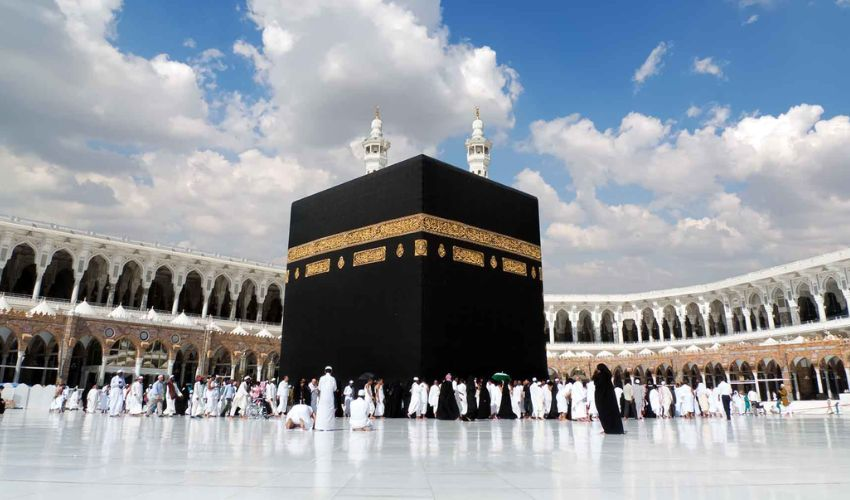
Pakistan’s Ministry of Religious Affairs and Interfaith Harmony has opened applications for Hajj 2026 under both the government and private schemes, kicking off a phased drive that combines online registration with bank-based payment windows. Registered applicants were invited first, with the ministry accepting initial instalments at designated bank branches and via the official Hajj portal.
Islamabad has been allotted a total national quota of 179,210 pilgrims for Hajj 2026. Of those seats, 129,210 are reserved for the government (regular) scheme while the remainder is allocated to private tour operators — an arrangement that organisers say allows a balance between state management and private-sector capacity.
Cost is a key concern for hopeful pilgrims. Government sources estimate the regular Hajj package will range between PKR 1,150,000 and PKR 1,250,000, payable in two instalments; banks designated by the ministry began collecting the first payments in early August, and remaining balances are scheduled later in the year after finalising service provider contracts. Authorities emphasise that collections will stop once the quota fills and that selection for some slots is strictly first-come, first-served.
Practical steps and eligibility: applicants must hold a valid Pakistani passport (with sufficient validity), present CNIC/NICOP, medical certificates, and specified photographs. Children born after March 1, 2014 are not eligible this year; meanwhile, the government has reportedly relaxed previous limits on repeat Hajj and the upper age restriction for applicants. Payments and verification may be completed online through the ministry’s official Hajj portal (applyonline.hajjinfo.org) or at participating bank branches.
Early uptake has been strong. Government statements and media reports indicate tens of thousands of forms were submitted during the first phase — authorities reported receiving over 58,000 to 71,000 applications in early rounds, prompting a second phase to absorb more applicants before the quota is finalised. Pilgrims are advised to use only official channels to avoid grey-market agents and to keep receipts and digital confirmations for PTA and visa processing.
As the Hajj window approaches, prospective pilgrims should monitor the ministry’s official pages for any policy updates, vaccination requirements, and final package details — and consider booking early through authorised banks or registered operators to secure a seat under Pakistan’s allotted quota.